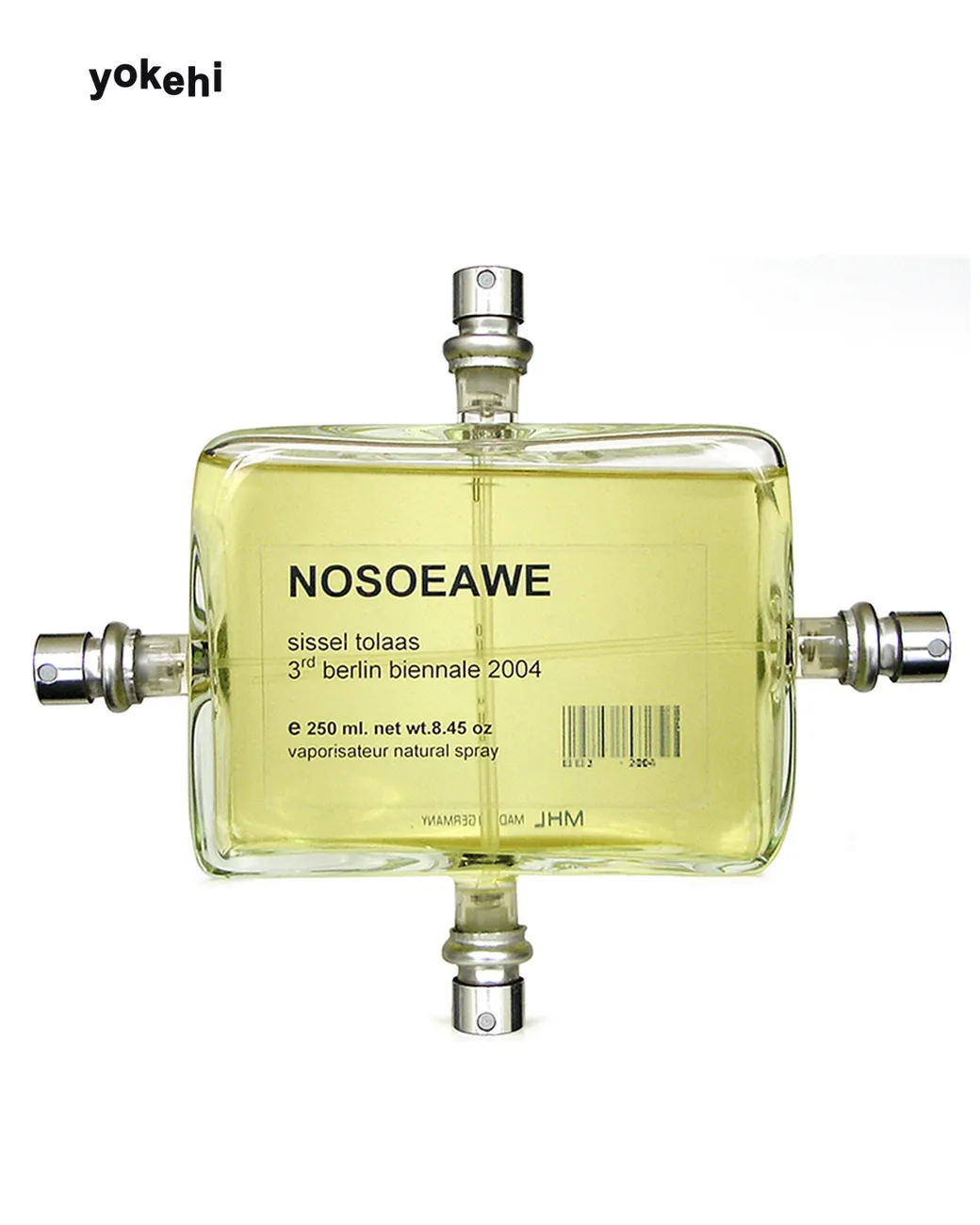
a perfume with directions instead of notes
Most perfume is built to smell good. In 2004, a Norwegian researcher and a German perfumer built a family of perfumes designed to smell like an actual city instead, whichever parts of that city happened to smell like fish, coal, or spoiled garlic. None of them were ever sold.
a lab built to smell one city
Sissel Tolaas is a Norwegian researcher who studied chemistry, mathematics, and linguistics across universities in Oslo, Warsaw, Moscow, St. Petersburg, and Oxford before settling in Berlin. In January 2004 she opened the Smell Research Lab there, backed by International Flavors and Fragrances (IFF), one of the industry’s largest fragrance and flavor companies. Using headspace technology, a method that captures a scent directly from an object rather than approximating it from raw materials, she and her team recorded and archived more than 7,000 smells from four districts of the city, each assigned its own compass direction.
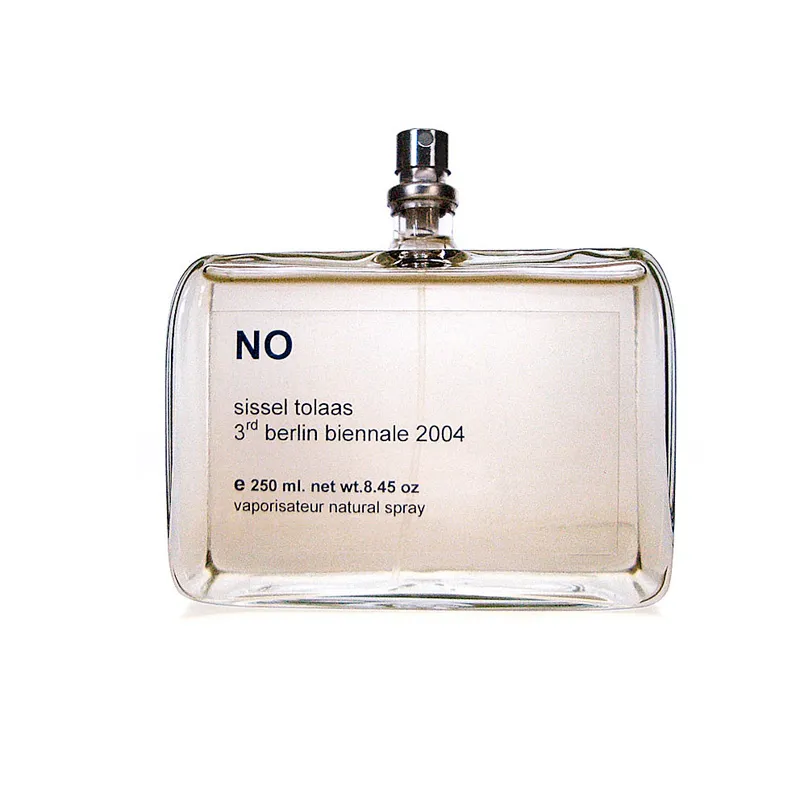
Turning that raw archive into something wearable needed a perfumer, so Tolaas brought in Geza Schoen, a German perfumer who had spent over a decade training at the fragrance house Haarmann & Reimer. Schoen selected the specific captured molecules that read as most characteristic of each district and built them into four base scents, NO, EA, SO, and WE, two years before he founded his own label, Escentric Molecules.
a whole family built from four directions
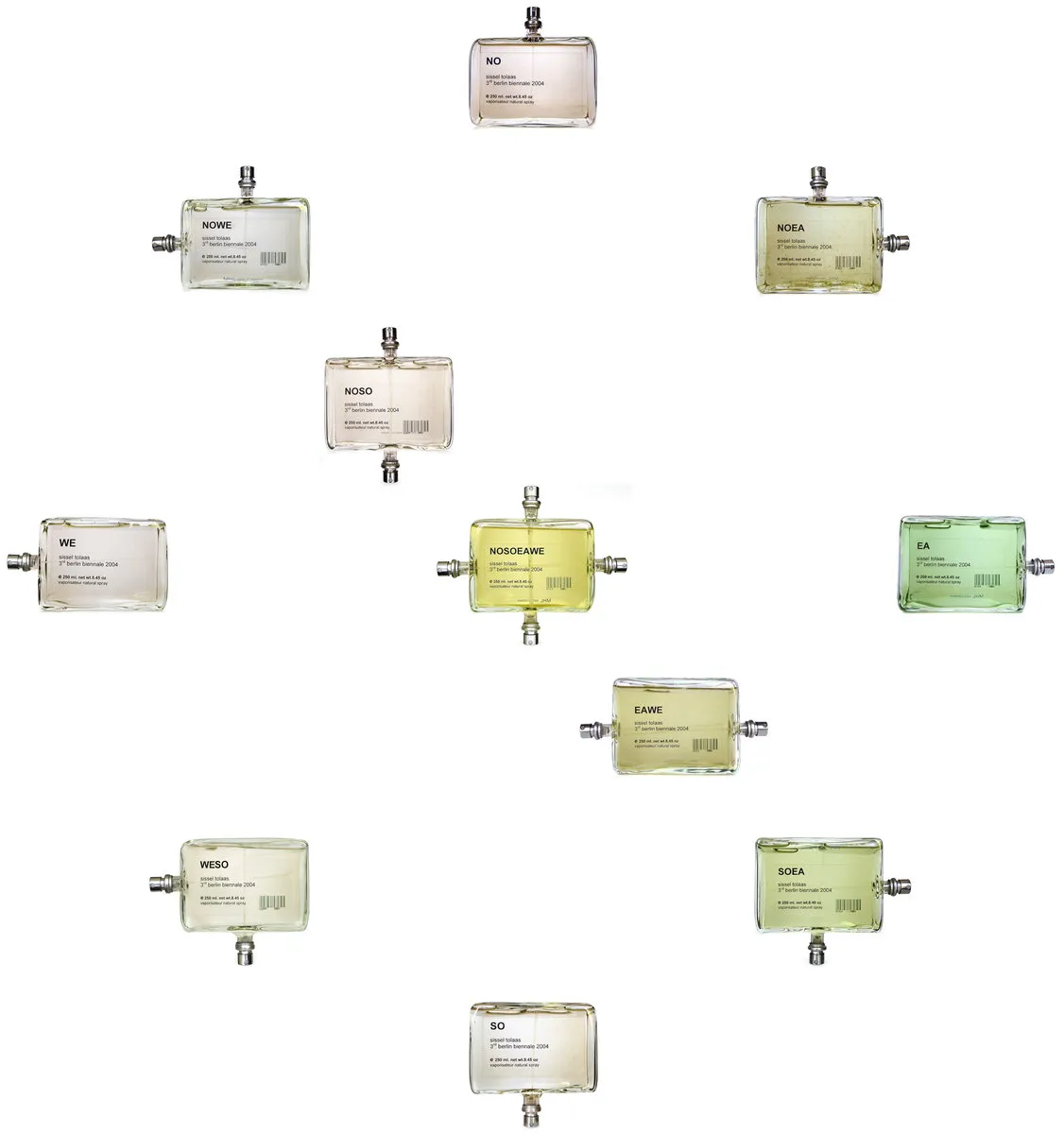
Schoen didn’t stop at four. He blended the bases in pairs, adjacent directions like north-east and south-west as well as direct opposites like north-south and east-west, to produce six further scents. Then he mixed all four bases into one final perfume, labeled NOSOEAWE, the four-nozzle bottle pictured at the top of this post. It represents the whole city at once. A contemporary review of the project described even more directional pairings than the ones photographed together here, suggesting the full bottled family may run larger still.
the hardware does the talking
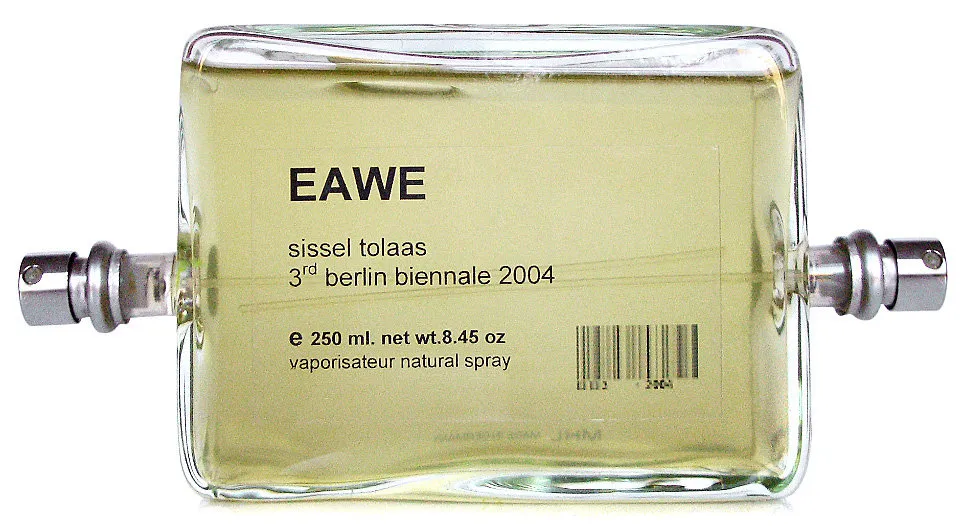
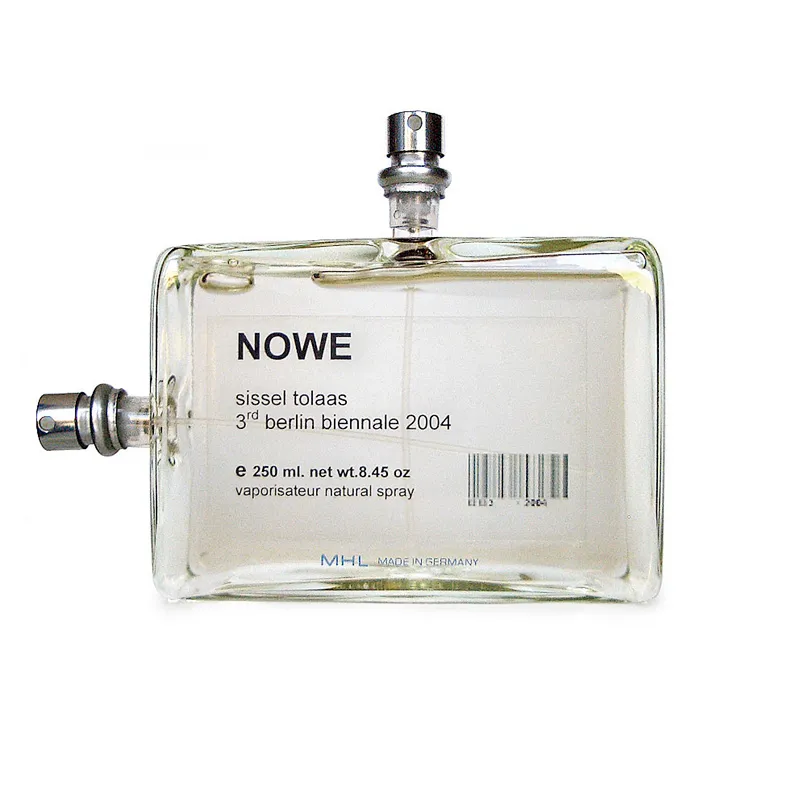
The bottles carry the compass logic into their own hardware, not just the label. A single-direction base like NO gets one nozzle. A blend of two opposite directions like EAWE gets two nozzles on opposite sides of the bottle, not at a corner. A blend of two adjacent directions like NOWE gets two nozzles set at a shared corner instead. All four directions combined gets four, one on every side. The bottle becomes a small, working diagram of the smell inside it, before anyone even opens it.
exhibited twice and never sold
The project debuted at the 3rd Berlin Biennale in 2004, then travelled to New York in 2011 as part of the Museum of Modern Art’s Talk to Me: Design and the Communication between People and Objects, where MoMA photographed and credited the bottles directly. “Smell immediately locates you in a space,” Tolaas has said of the project. “It gives you new tools to perceive your surroundings.”
None of the scents were built to be liked. Reviewers who have smelled the base perfumes describe north Berlin as fishy and chemical and east Berlin as cold leather and coal smoke. The goal was accuracy, however unpleasant the result. More than two decades on, Berlin, City Smell Research has never been released commercially. The only way to smell it has been to stand in front of one of the two exhibitions that showed it.
Sources:MoMA, Talk to Me: Berlin, City Smell Research · Fragrantica, Berlin, City Smell Research · Wikipedia, Sissel Tolaas