how the psp became jdm culture
Sony’s PSP launched in Japan on December 12, 2004, in North America on March 24, 2005, and across Europe on September 1, 2005. It went on to sell 76.4 million units. Most of that history gets told through the games. Less of it gets told through the two accessories Sony actually built for it, a real camera and a real GPS receiver, both of which ended up doing exactly what they were designed to do: mounted in cars, photographing cars, on a console people were mostly using to play racing games about cars.
a handheld with a real gps receiver
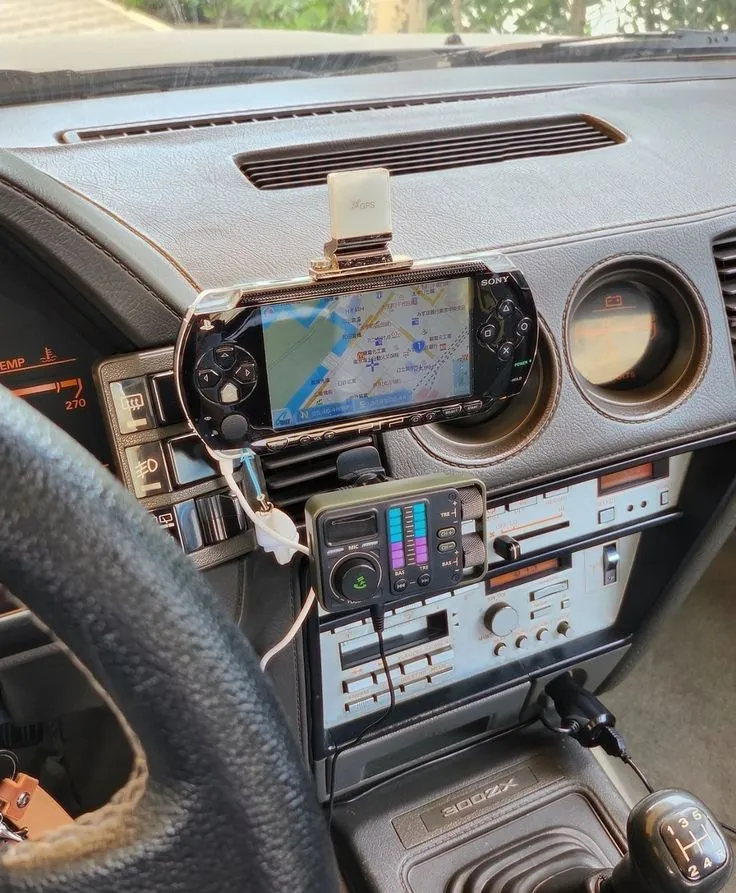
In 2006 Sony released a GPS add-on for the PSP, developed with Tele Atlas and NavNGo and sold in Japan as part of the Go!Explore line, plugging into the mini-USB port on top of the console with a UMD loaded with local maps. It gave the PSP turn-by-turn driving directions, city guides, and a positioning accuracy of about 5 meters. It was a real navigation unit, not a novelty. It was also released first in Japan, with a US version announced two years later in 2008.
Sources:Engadget, Sony extends PSP capabilities with Go!Messenger and Go!Explore · Wikipedia, PlayStation Portable
a camera that turned it into a dashcam
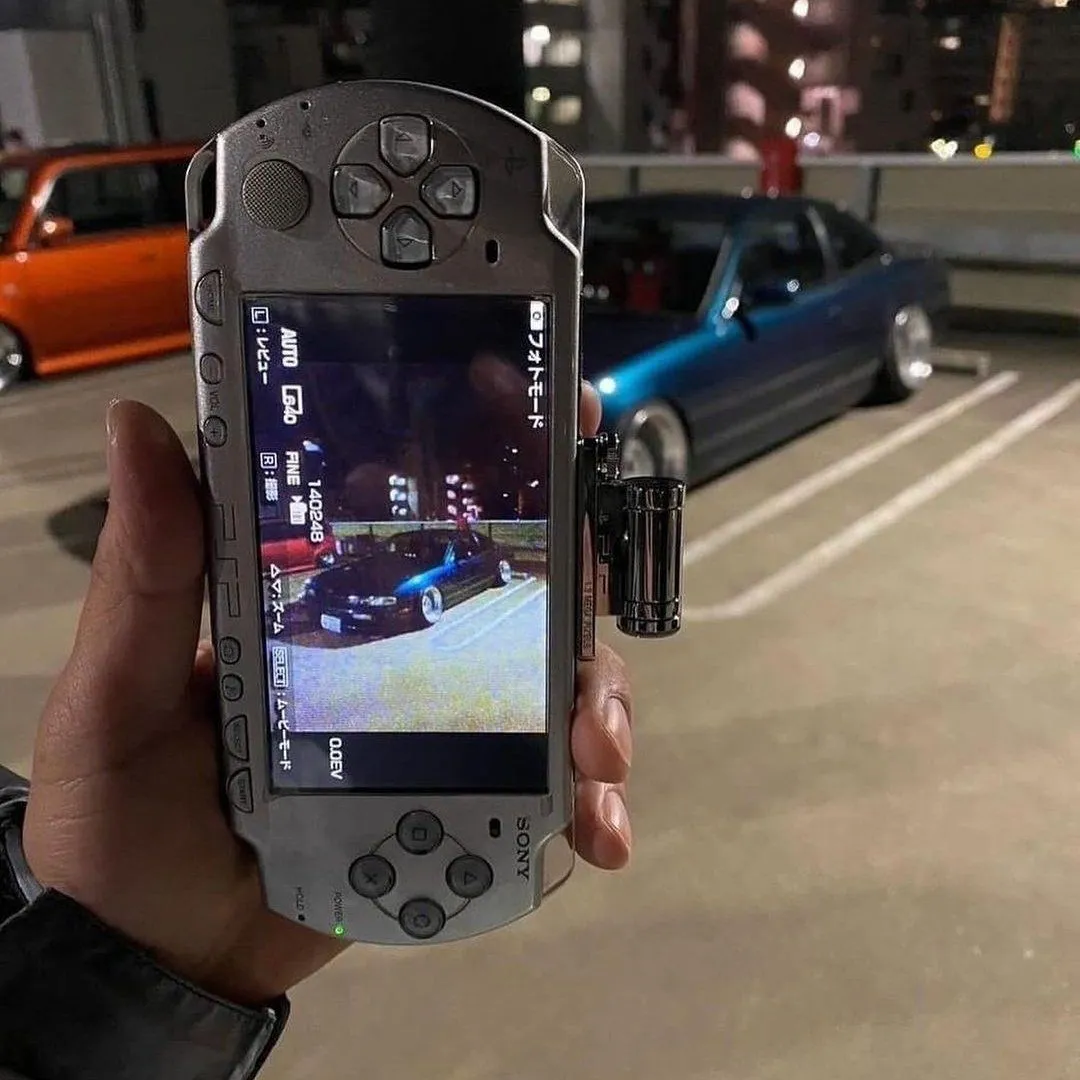
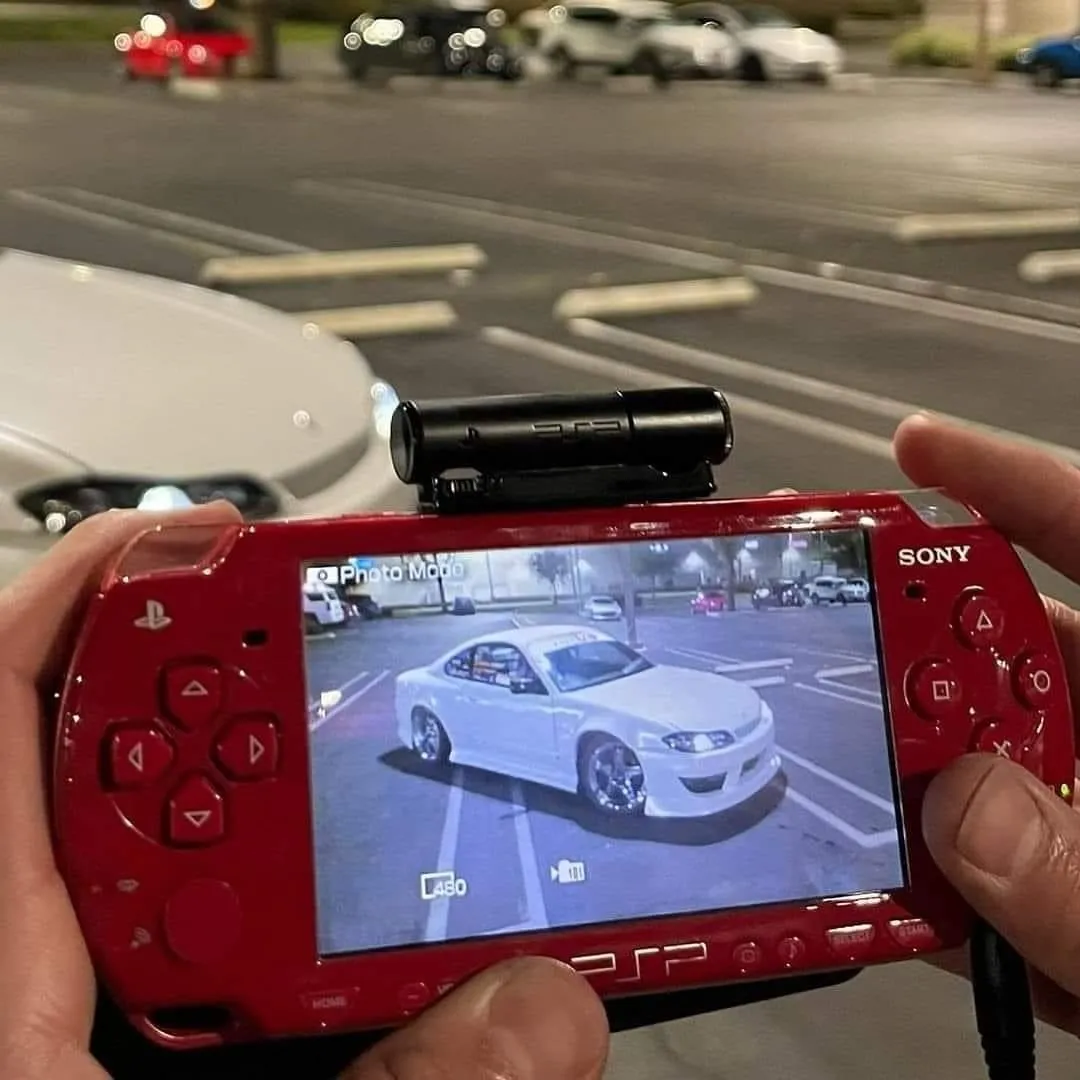
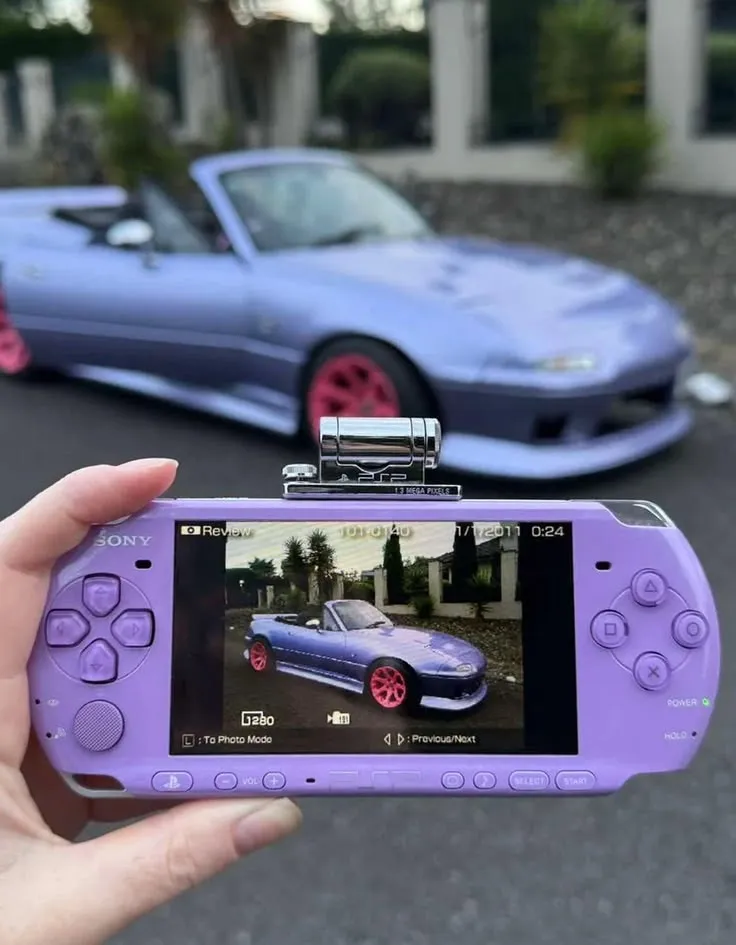
Sony’s other real accessory was a 1.3 megapixel camera that screwed into the same top port, released in Japan as Chotto Shot on November 2, 2006, and in Europe as Go!Cam on May 25, 2007. It shot photos up to 1280x960 and video at 480x272, 30 frames a second, with audio. It only fit the original PSP-1000, the thick first model, since later slimmer revisions changed the port.
That’s the accessory in both photos below, mounted and shooting live.
the games gave it a reason to be there
The PSP’s connection to car culture was not just accessory trivia, it was also the actual library. Genki‘s Wangan Midnight Portable came out in Japan on September 25, 2007, licensing real manufacturers, Nissan, Mazda, Subaru, Toyota, Mitsubishi, and putting the series’ own Devil Z, a heavily modified first-generation Nissan Fairlady Z, into a portable racing game. It’s a different generation of Z-car than the one badged on the dashboard above, but the same lineage, and the same idea: a Japanese sports car worth building a whole story around. Polyphony Digital’s Gran Turismo came to PSP in October 2009 as a launch title for the PSP Go. Initial D’s PSP entries put the same drift-focused, real-location driving into the console’s library too. None of that required the GPS or the camera to exist. It just meant the console was already sitting in the hands of people who were going to plug a camera into it and photograph the car in the parking lot anyway.
clear shells and custom firmware
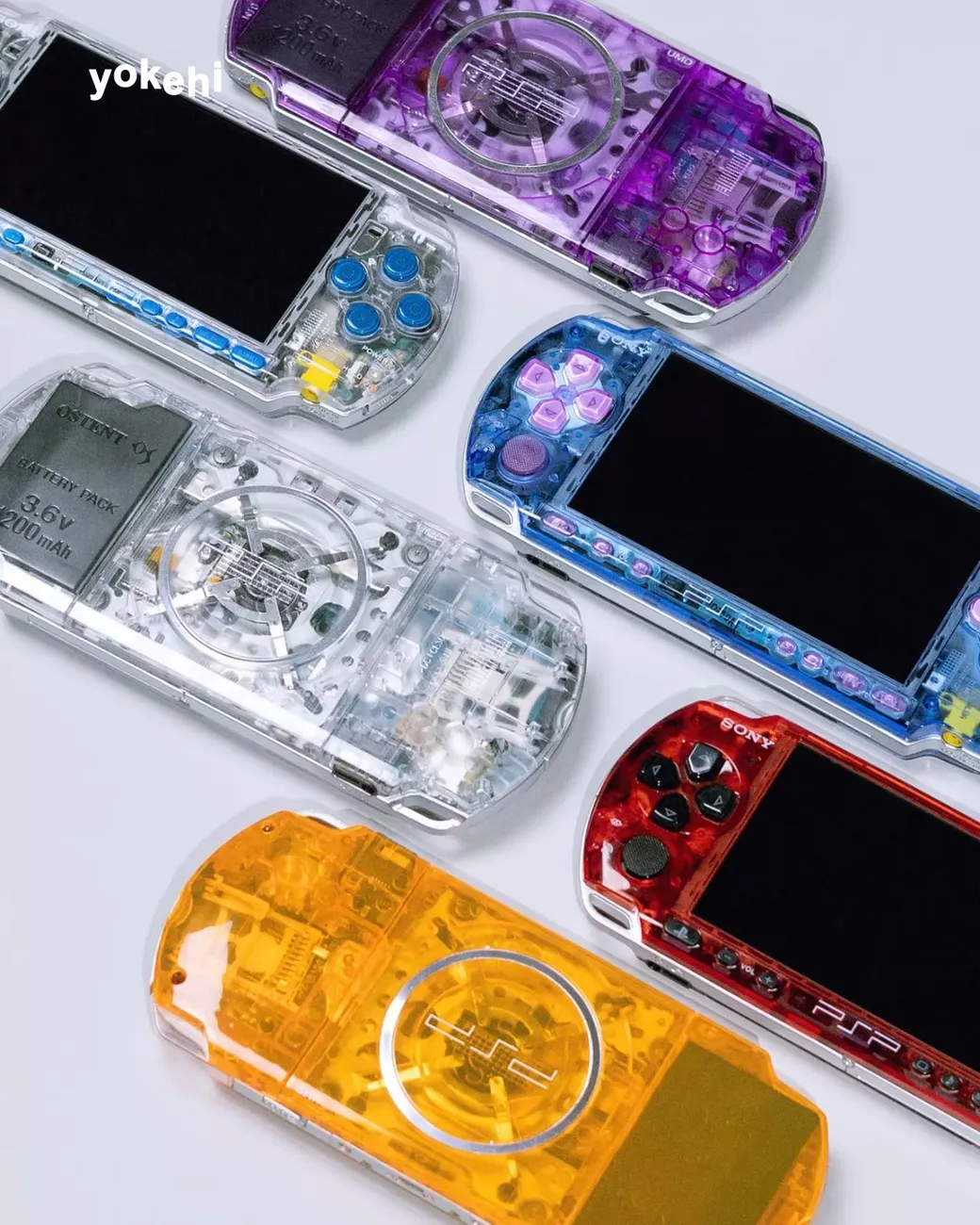
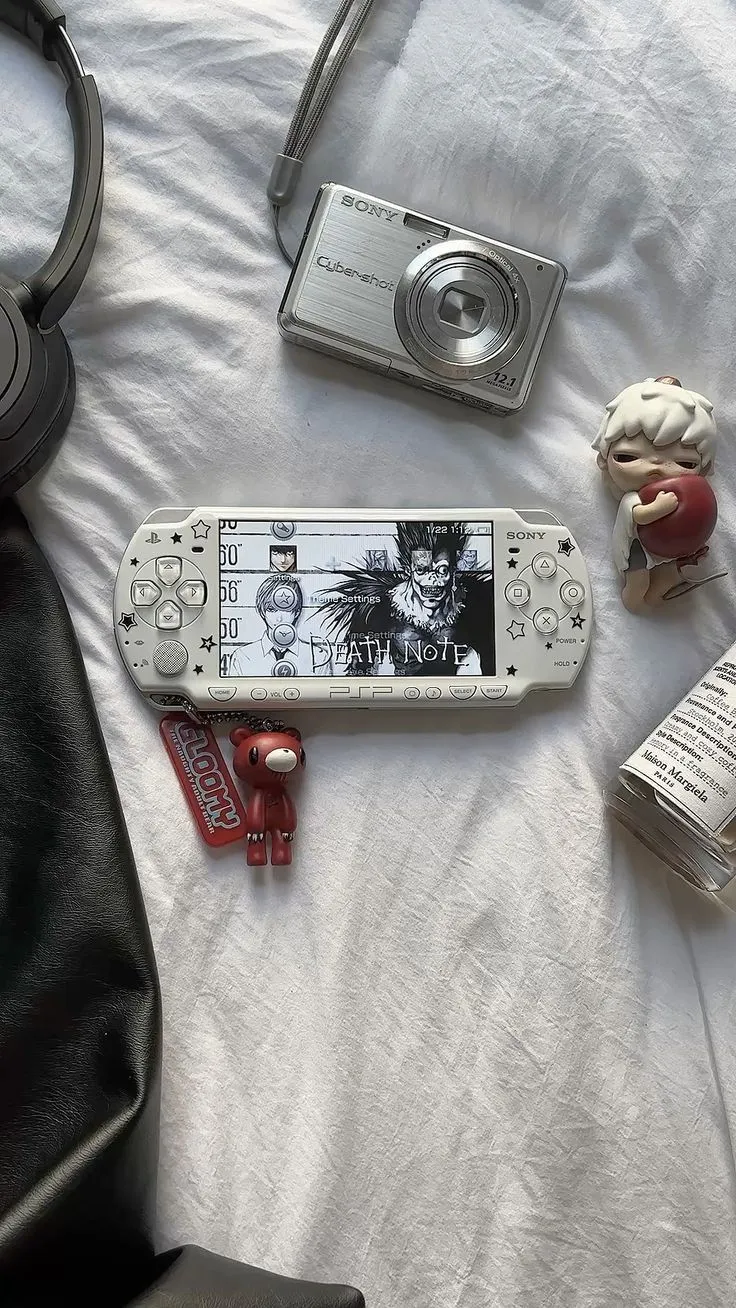
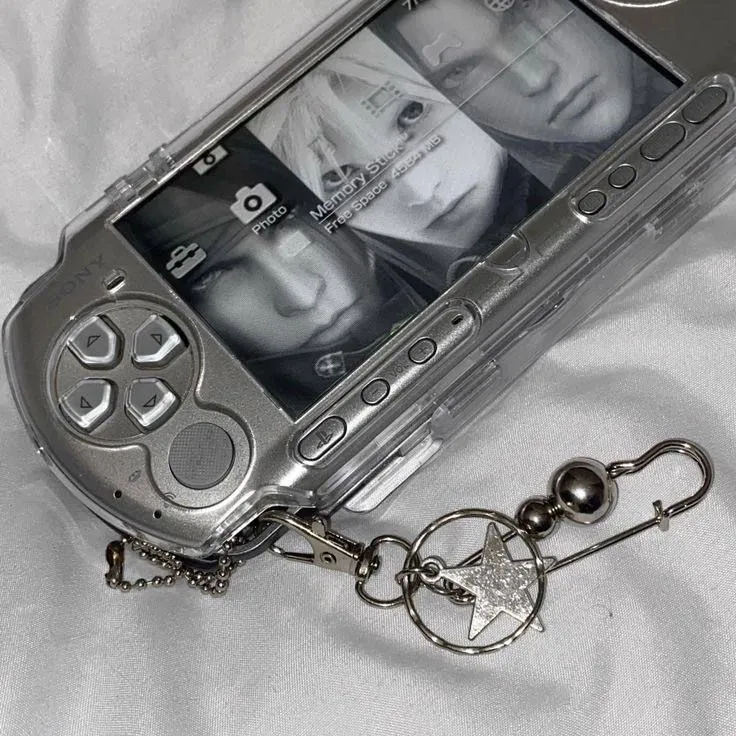
None of the accessories are what keeps the PSP circulating now. The console’s mod scene is active in 2026, with ARK-5 as the current custom firmware standard, unlocking ISO loading, plugins, and homebrew on any model from the original PSP-1000 to the PSP-3000 without touching the hardware. The other track is purely cosmetic: clear and colored transparent shells, the same Y2K move Nintendo made with the Game Boy Color, now sold as full replacement kits, sometimes paired with a USB-C port retrofit so a 20-year-old handheld charges on a modern cable.
Sources:Wikipedia, Go!Cam · Wangan Midnight Wiki, Wangan Midnight Portable · Gran Turismo official site, Gran Turismo for PSP · pspunk, PSP custom firmware guide
beyond the parking lot
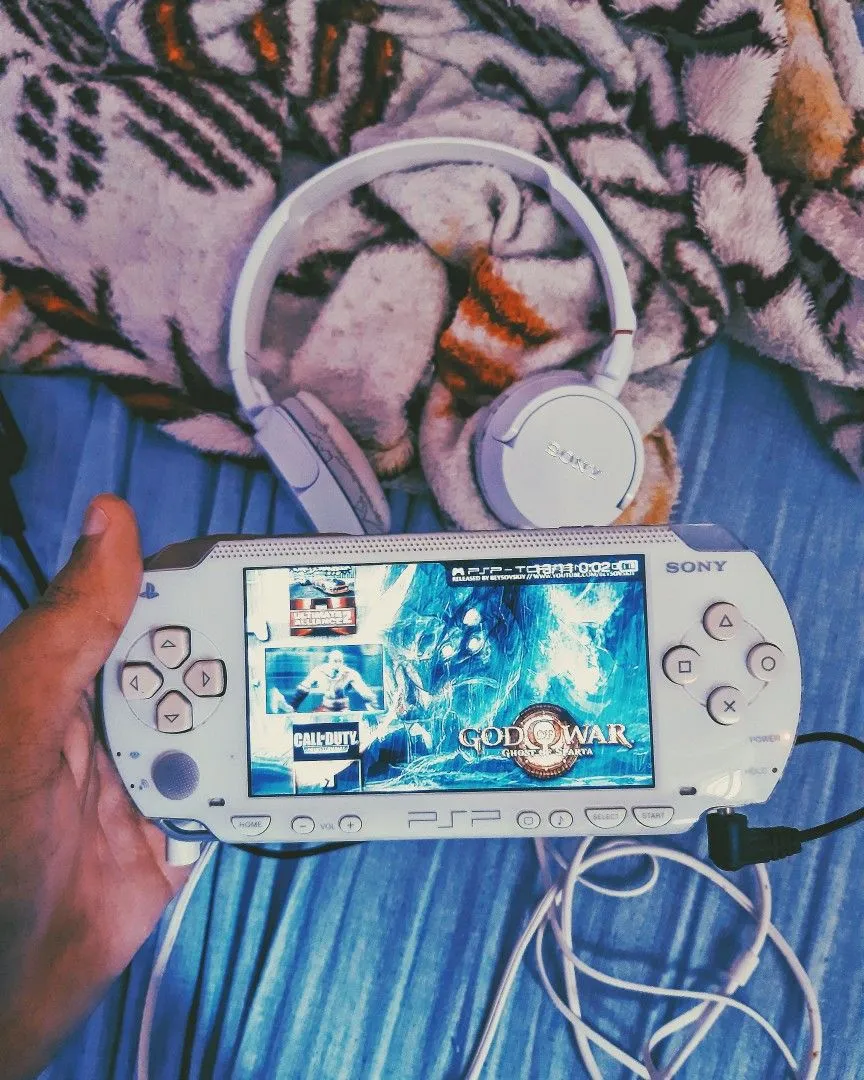
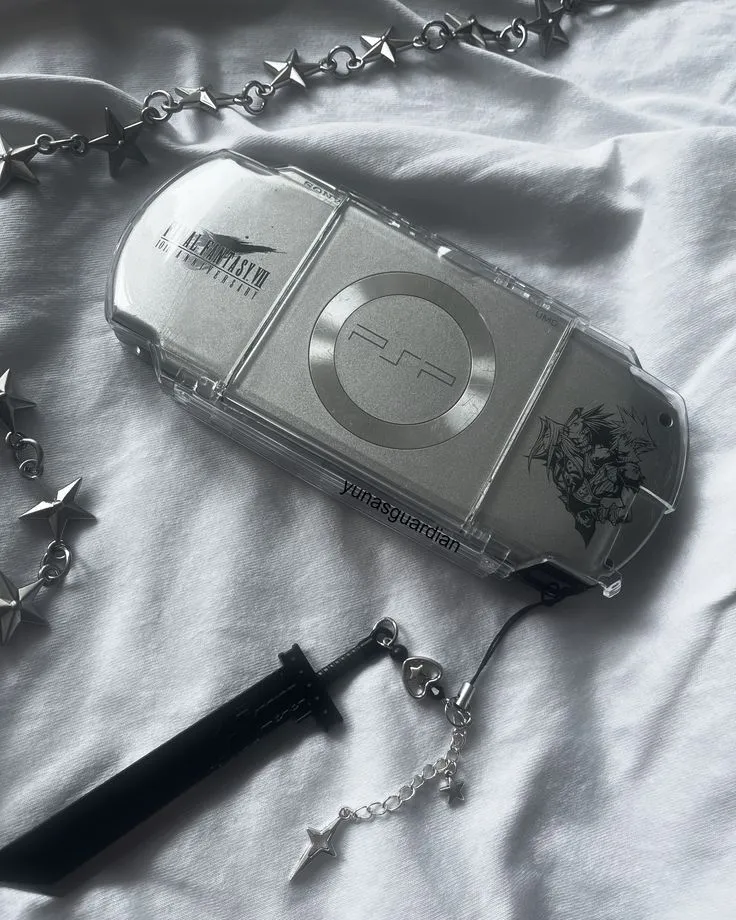
The same PSPs that show up mounted on dashboards also show up styled nowhere near a car. None of it is about cars. It’s the same instinct that put a camera on a dashboard: an old handheld worth arranging and photographing, not just turning on.
why get one now
A working PSP-1000 is still cheap on the secondhand market, and unlike a lot of 2000s tech it was never locked down enough to become e-waste the moment Sony stopped supporting it. CFW keeps it playable, the transparent shell kits keep it interesting to look at, and the camera and GPS units both still turn up secondhand for anyone who wants the accessory as built rather than as a photo of one. It was designed as a game console. It spent twenty years being a lot of other things too.