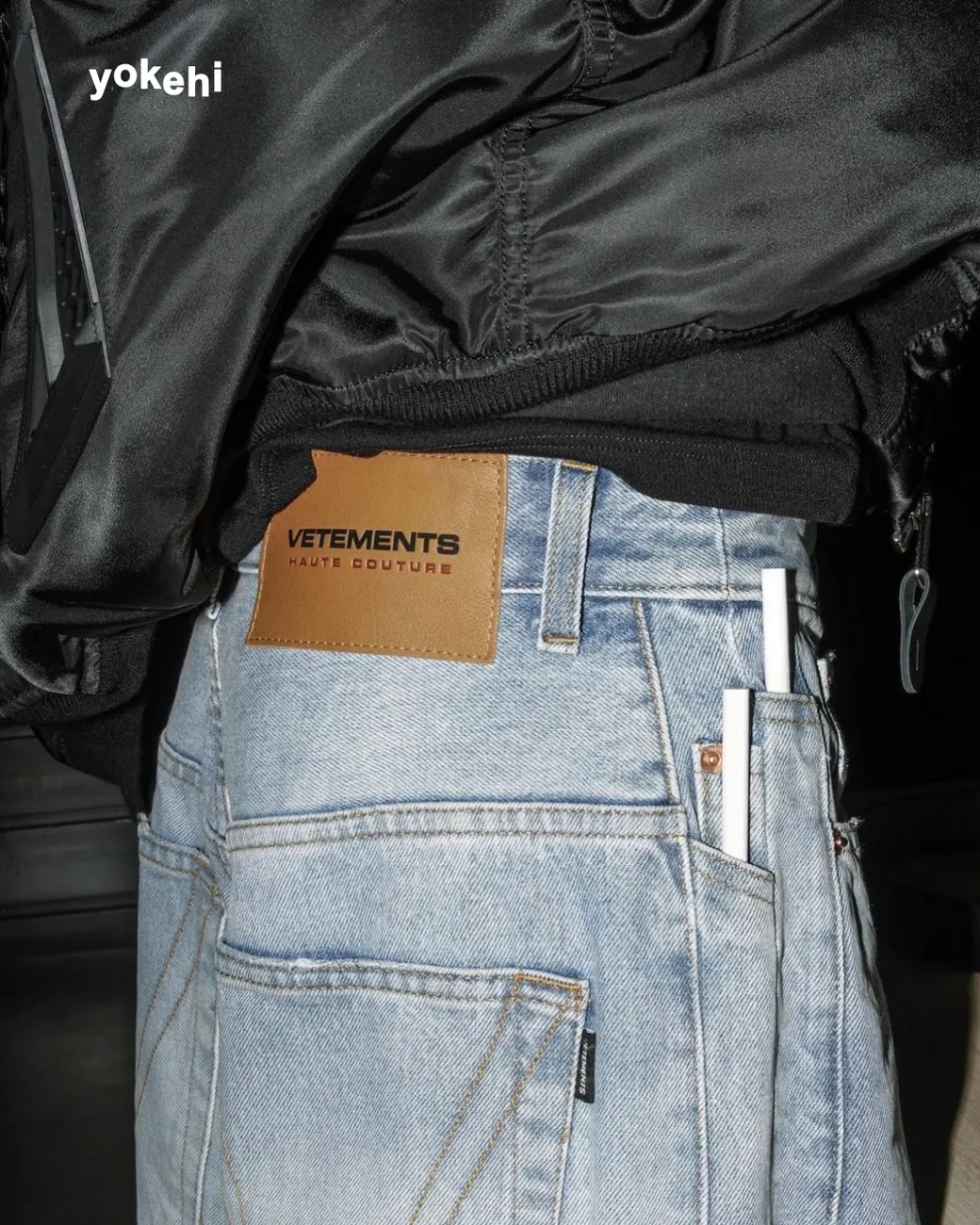
why do jeans have that leather patch?
The last post looked at the labels inside garments, the small cotton squares hidden against the lining. This one is about the one label that never learned to hide. Almost every pair of jeans on earth carries a small rectangular patch above the right back pocket, usually leather-coloured, usually stamped with the brand’s name and often a picture of something being pulled apart. It is such a familiar detail that most people never think to ask why it is there in the first place.
1886 and a patent about to expire
The story starts with Levi Strauss and Jacob Davis, who patented the riveted denim work pant in 1873 and had almost twenty years of exclusive rights before the patent moved into the public domain around 1890. Once that happened, other workwear brands were free to make riveted jeans of their own, and names like Boss of the Road and Can’t Bust ’Em started appearing on shelves alongside Levi’s. The leather patch was Levi’s answer to that, introduced in 1886, ahead of the patent expiry, to give the product something instantly recognisable that a competitor could not just copy.
The design was two horses trying to pull a pair of jeans apart and failing. Levi’s chose an image rather than words for a very specific reason, which was that a large portion of their customers in the American West at the time did not read English, either because they were illiterate or because they were immigrants working in mines and on railroads. A picture of two horses straining against a pair of trousers made the durability claim without a language barrier, and customers could walk into a shop and ask for the pants with the two horses. In fact, before the word Levi’s was registered as a trademark in 1928, those jeans were sold under the name Two Horse brand.
That patch has been in continuous use ever since. In 2014, 24/7 Wall Street named the Two Horse design the fifth oldest continuously used trademark in the world.
Levi’s now sells the archive itself
The historical value of the patch has become part of the current product in a very direct way. Levi’s Vintage Clothing (LVC), the imprint that produces archival reproductions of the brand’s own past, treats the patch as one of the most important details to get right on each reissue. Weight, stamping, ink colour, position, and even the way the patch is aged are all matched to the reference year.
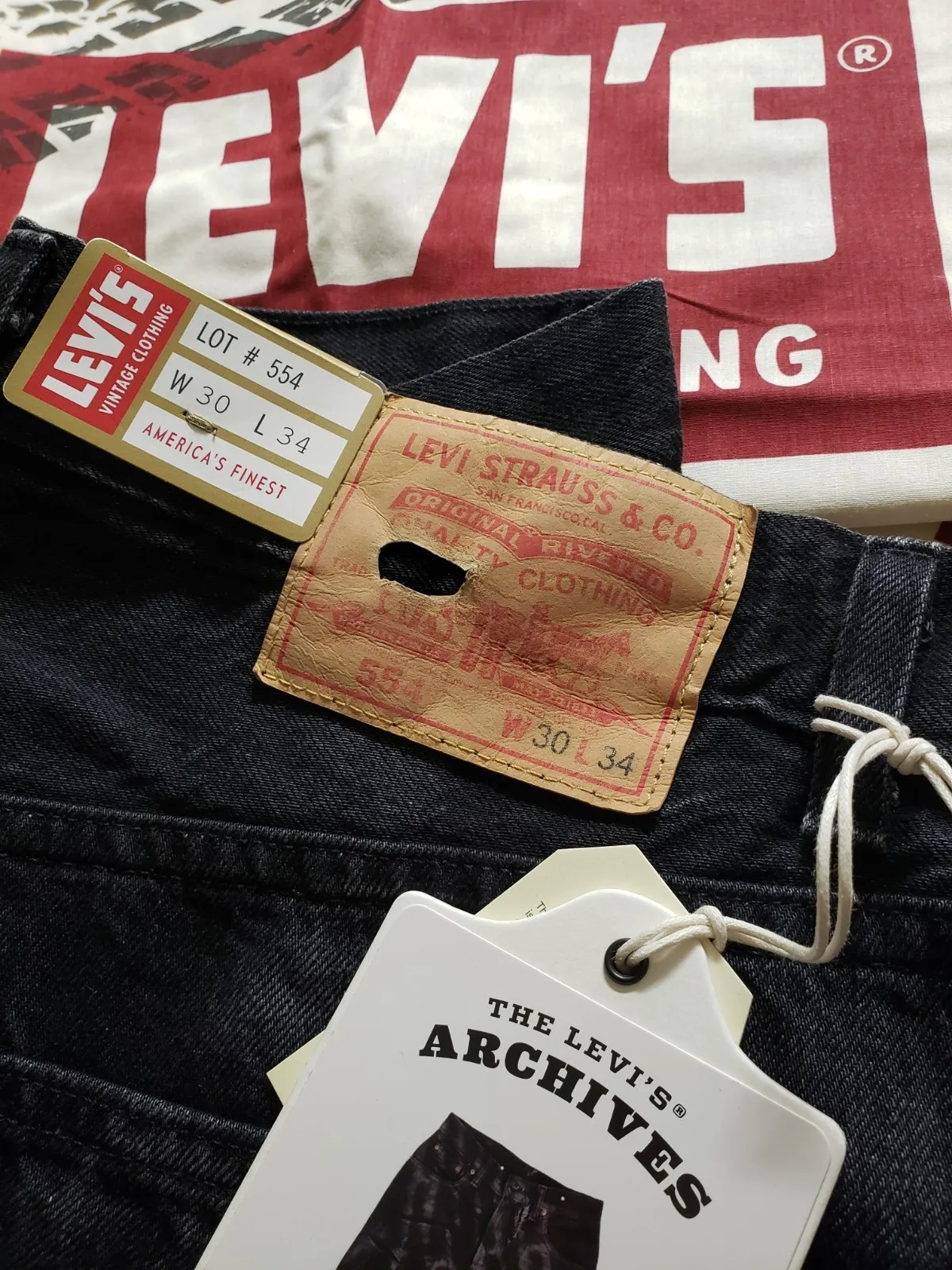
The clearest recent example is the LVC 1942 501, released on August 13, 2026, through Levi’s Store Kyoto and a lottery on the Japanese Levi’s webstore, priced at ¥66,000. The 1942 reference is not decorative. That specific year sits inside a short transitional window during the Second World War when American manufacturers were subject to wartime rationing, which stripped decorative and non-essential details from clothing. Buttons lost their logos, back cinches disappeared, legs were cut narrower to save fabric, and denim weight increased. The 1942 501 sits inside that shift, with heavy 13 oz shrink-to-fit selvedge and structural details still carrying over from the late 1930s.
That is the archive being sold as the current product, patch first, and it says something about where the format has ended up. Levi’s designed the patch in 1886 to prove a claim about durability. In 2026 it uses the same patch, in period-accurate form, to sell the history of that claim.
Sources:StupidDope on the LVC 1942 501 · Gear Patrol on the 1942 501
The reason it survived on every other brand
Once Levi’s had established the format, other denim makers followed. A leather patch above the back pocket became the industry standard place to put a brand mark, partly because the position is highly visible when someone is walking away and partly because it survives a lot of hard wear. The patch outlasts a printed care tag, a paper hangtag, and often the fabric around it.
There is also a functional layer worth noting, which is that the patch is small enough to carry lot numbers, waist and inseam measurements, and any other information a shop or a factory needs to identify the piece at a glance. The Two Horse patch on a Levi’s 501 has historically carried the style number, the year of the patent, and (on older pairs) the model designation 501XX.
Why so few of them are actually leather
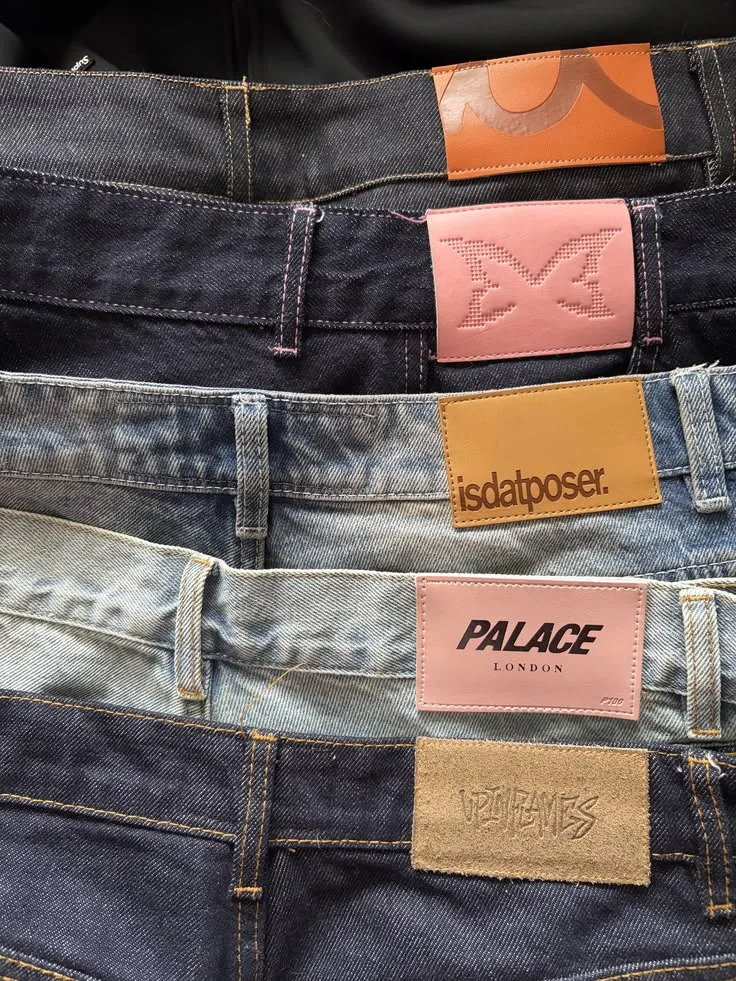
Most patches on jeans today are not leather. The standard material is a substance called jacron, a paper-based cellulose fibre that has been pressed and treated to look and feel like leather, and to survive washing without cracking, peeling or bleeding dye. Levi’s uses it, and so do most mainstream denim brands, for a mix of reasons that include cost, consistency, water resistance, and the growing preference for materials that are not animal-derived. Real leather patches still exist, mostly on higher-end or heritage-focused labels, but on a typical pair of new jeans the odds are that the patch is jacron.
This creates a small irony worth naming, which is that the leather patch was originally chosen because leather could survive a workday when paper and embroidery could not, and today most leather patches are made of a kind of paper that just wears like leather. The visual language stayed the same. The material underneath it changed.
The Japanese echo
Japanese denim brands, working in the vintage-Americana tradition, have taken the patch seriously in a way most mainstream brands no longer do. Studio D’Artisan, one of the founding Osaka brands of the Japanese repro movement, uses a patch showing two pigs pulling a pair of jeans apart, a direct and affectionate reference to the Levi’s Two Horse design. Kapital, out of Kojima, uses woven patches and leather tags that treat the format as a piece of tiny illustrated storytelling rather than a place to put a wordmark.
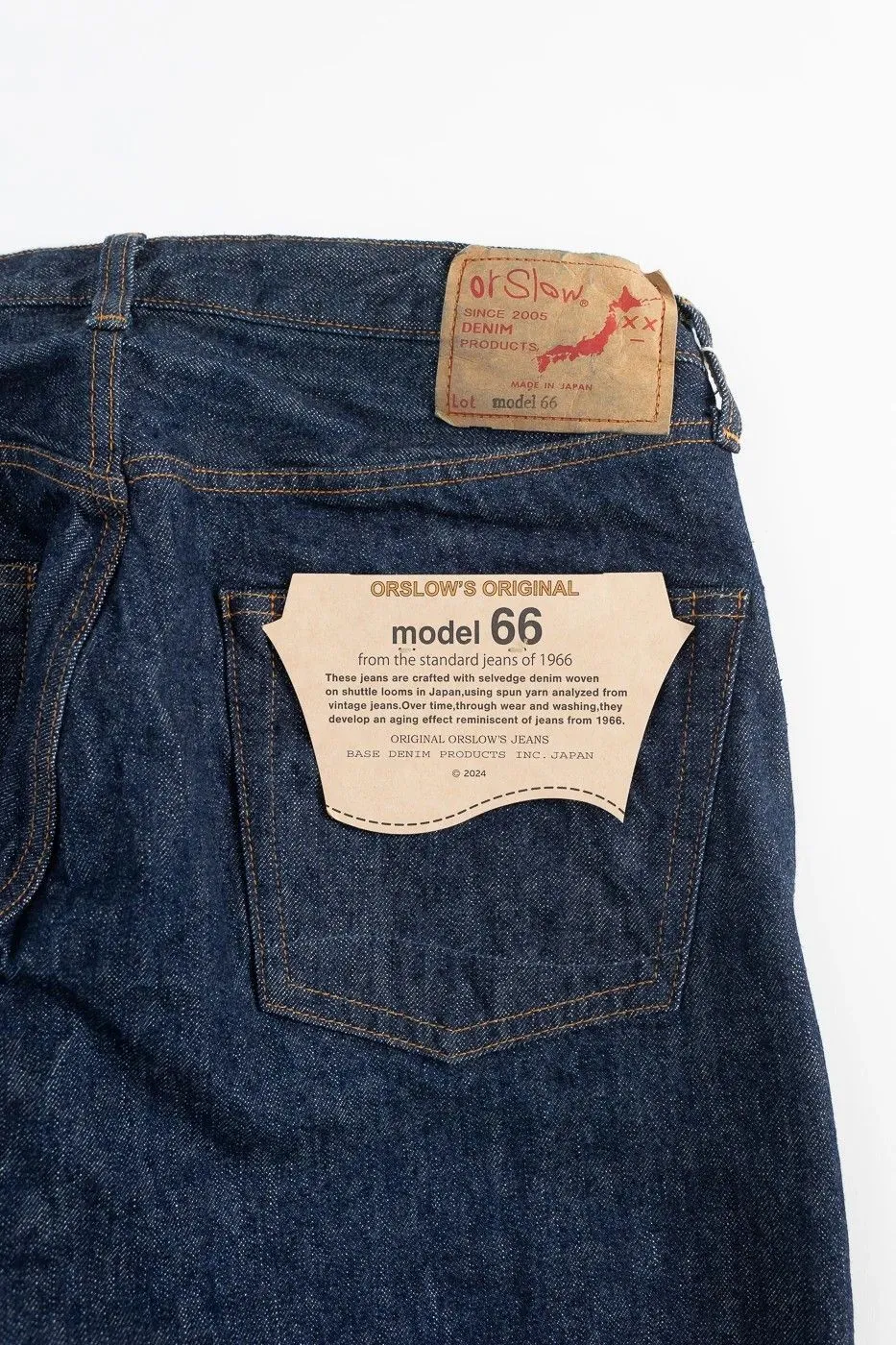
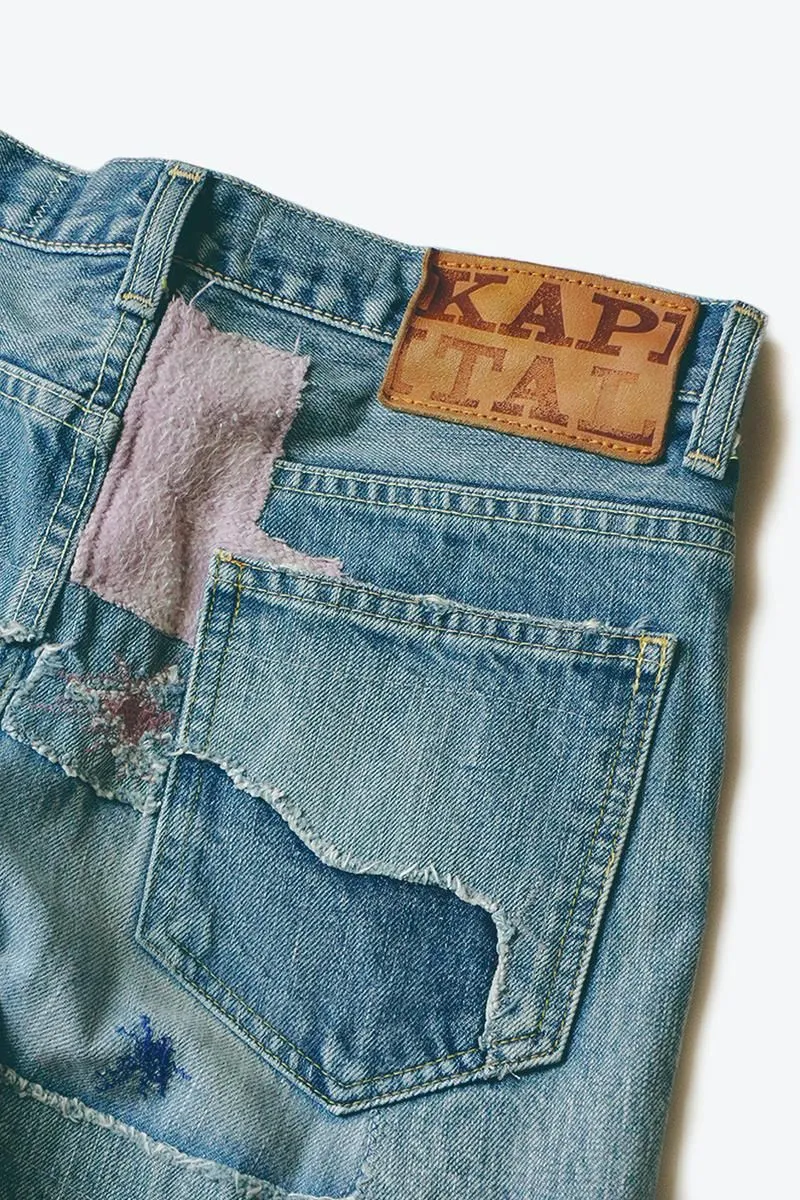
The patch on the cover of this post belongs to the same tradition, a small brown leather rectangle stamped with kanji, sitting above a pocket painted with dice. The tag is one detail in a design where everything, down to the pocket, is asking to be looked at.
These brands treat the patch as a design surface with a long history behind it rather than a place to put a wordmark. That is closer to the spirit in which the patch was originally introduced than most of what is currently produced under the same format.
When the patch becomes the design
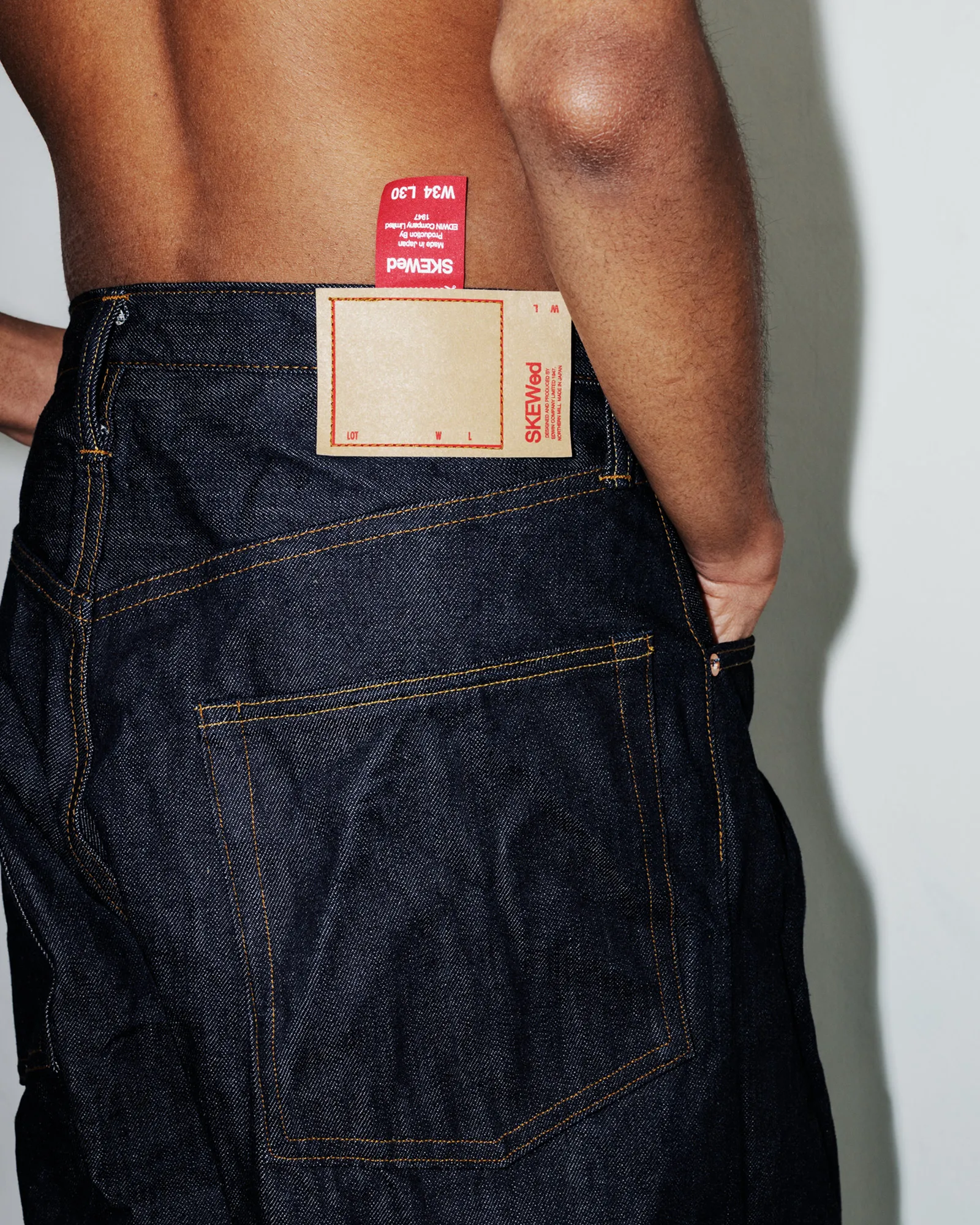
Not every use of the format is quiet. A few designers over the past twenty years have taken the patch itself and made it larger, louder, or more literal than the original brief called for.
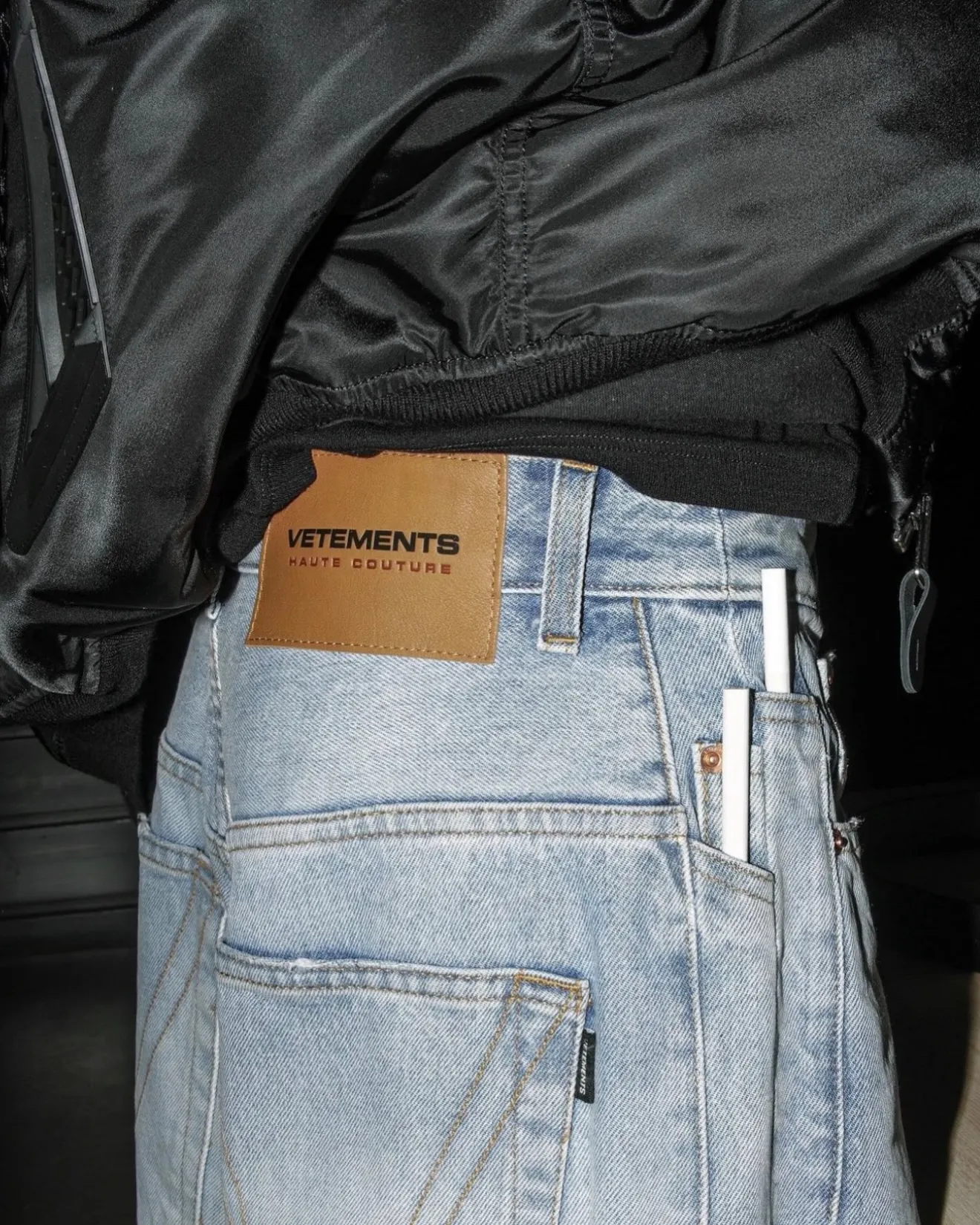
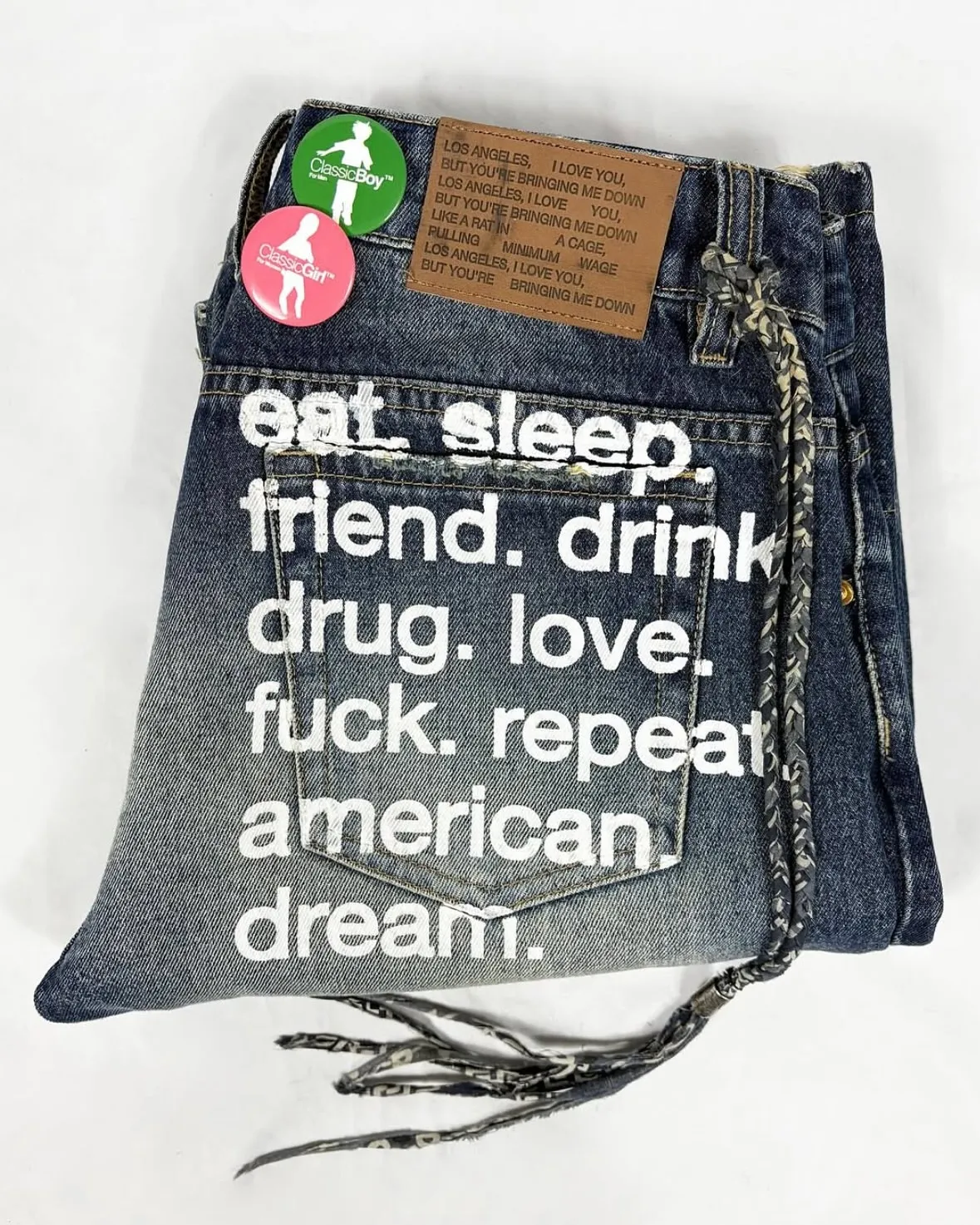
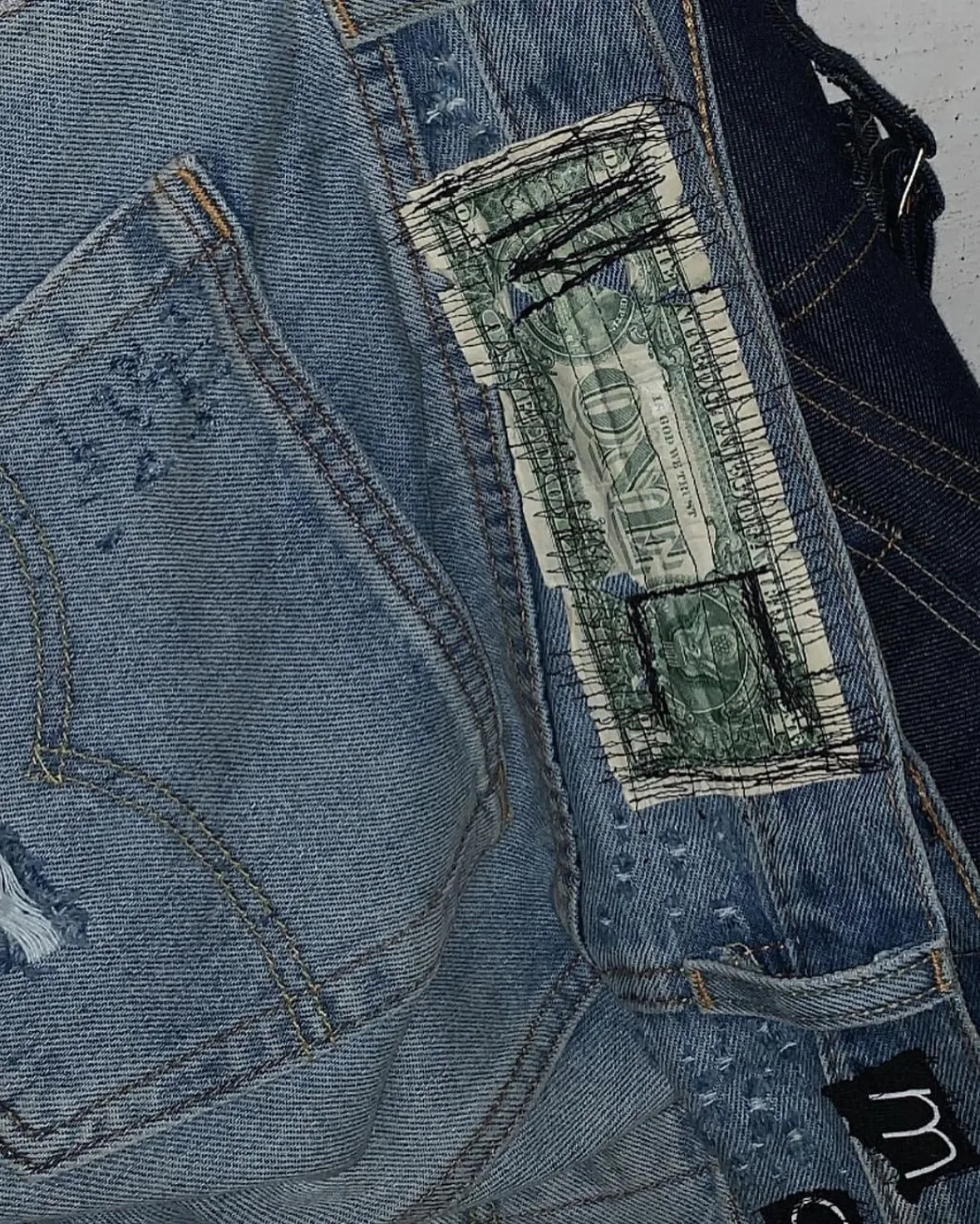
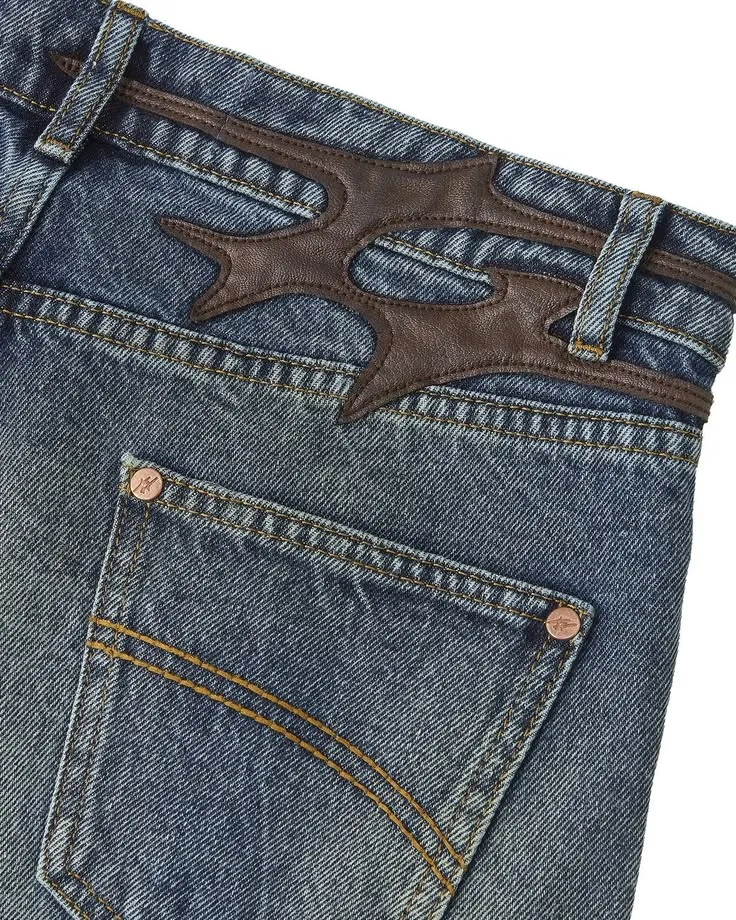
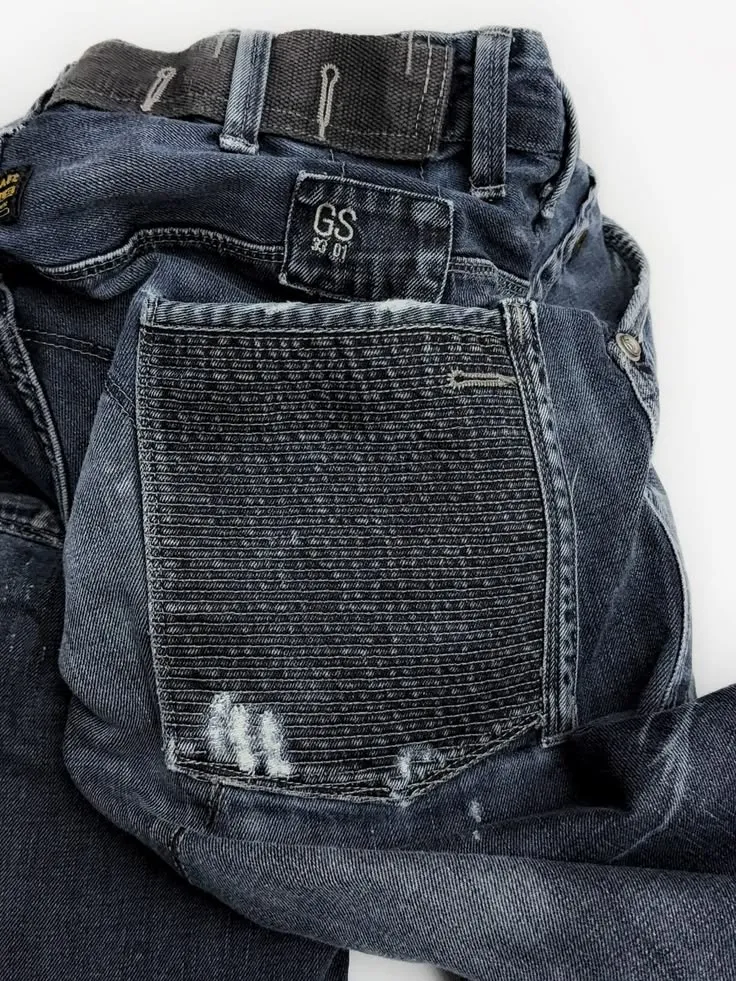
What it is doing now
The patch today functions mostly as branding. The durability claim it was invented to make is no longer necessary, since modern denim construction is well understood and reviewed in ways it was not in 1886. What the patch does now is signal a piece of received tradition, a nod to workwear heritage, and (on the higher end) a small piece of design that rewards closer looking. On a mainstream pair of jeans it is decorative. On a heritage or Japanese repro pair it is often the piece of the garment that has been thought about most carefully.
Either way, it is the one small square of the design that has survived unchanged in position for close to 140 years, which is unusual enough in fashion to be worth noticing.
View this post on Instagram
Sources:Levi Strauss & Co, Two Horses and 130 Years of History · Levi Strauss & Co, Horse Power: The Story Behind Our Jeans · Wallpaper*, The history of Levi's Two Horse Patch logo · Heddels, Vintage Levi's 501 Jeans, The Ultimate Collector's Guide · Denimhunters, What is the brand patch on jeans · Haku Clothing, Discover Niche vol.1 SKEWED · Hypebeast, Levi's Vintage Clothing to Re-Release the Archival 1942 501 Jeans · OTOKOMAE, Levi's 1942 501 reissue release details